Ingredients
Method
- Sear the ribs: Pat the short ribs dry with kitchen paper — this is crucial for a good crust. Heat the vegetable oil in a large, heavy-based pot or pressure cooker over a medium-high heat until it shimmers. Add the ribs in a single layer, working in batches if needed. Sear each side for 3-4 minutes until deeply browned and crusty. You'll hear a satisfying sizzle, and the meat will release a nutty, toasty aroma. Transfer the ribs to a plate.
- Sweat the vegetables: Reduce the heat to medium. Add the onions, carrots, and celery to the pot. Cook for 5-7 minutes, stirring occasionally, until they soften and turn translucent. The onions should look glossy and smell sweet, not burnt. Add the garlic and cook for another minute until fragrant.
- Build the base: Stir in the tomato purée and cook for 2 minutes. It will darken in colour and smell intensely rich. This step removes the raw, tinny taste of the purée and adds depth.
- Deglaze and add liquid: Pour in the beef stock and balsamic vinegar, using a wooden spoon to scrape up all the browned bits stuck to the bottom of the pot. Those bits are packed with flavour. Bring the liquid to a gentle bubble — you should see small, lazy bubbles breaking the surface, not a rolling boil.
- Braise the ribs: Return the seared ribs to the pot, nestling them into the liquid. Add the rosemary, thyme, and bay leaves. If using a pressure cooker, lock the lid and cook on high pressure for 45 minutes. If using a regular pot, bring to a gentle simmer, cover with a tight-fitting lid, and cook on the hob over the lowest possible heat for 1 hour 30 minutes to 1 hour 45 minutes. The liquid should barely tremble. When done, the meat will have pulled away from the bone slightly and feel tender when pierced with a fork.
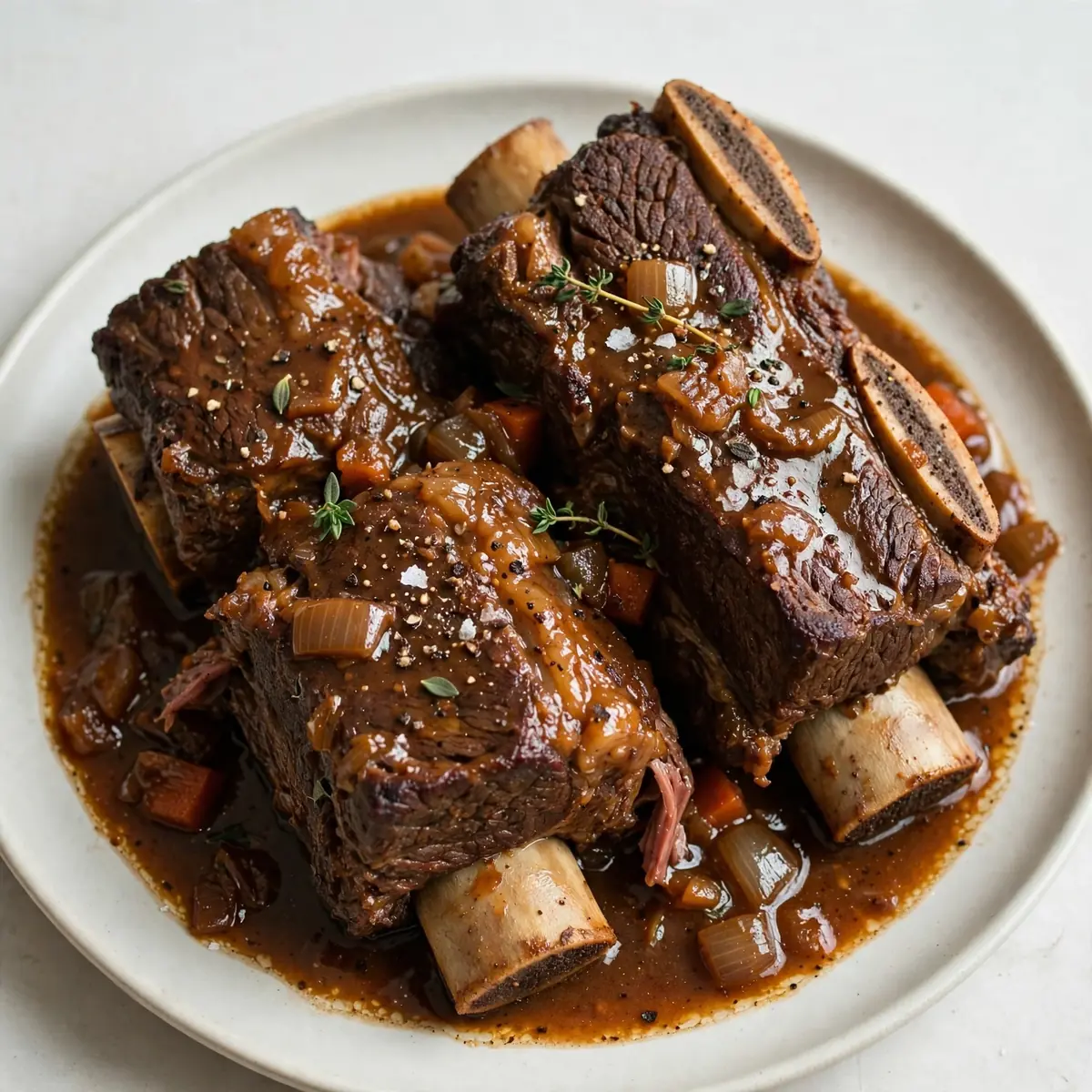
- Rest and finish: Turn off the heat and let the pot sit, covered, for 15 minutes. This resting time allows the fibres to relax and reabsorb juices. Remove the ribs to a warm plate and discard the herb sprigs. If you want a thicker sauce, bring the braising liquid to a boil and let it reduce by about a third, or stir in the cornflour slurry and simmer for 2 minutes until it coats the back of a spoon. The sauce should look glossy and feel velvety.
Notes
For a thicker sauce, use the cornflour slurry or reduce the braising liquid by a third. Resting the meat after braising is key for tenderness.