Ingredients
Method
- Preheat your oven to 220°C (200°C fan). While it heats, line a baking tray with parchment paper. The oven should be fully up to temperature before the biscuits go in — this initial blast of heat is what creates those tall, flaky layers.
- Make the biscuit dough. In a large bowl, whisk together 500g flour, 1 tablespoon baking powder, and 1 teaspoon salt. Add the cold cubed butter and use your fingertips to rub it into the flour until the mixture resembles coarse breadcrumbs. You should see small, pea-sized pieces of butter still visible — those will steam in the oven and create pockets of flakiness. Pour in the cold milk and stir with a fork just until a shaggy dough forms. The dough will look rough and slightly dry, which is exactly what you want.
- Shape the biscuits. Turn the dough onto a lightly floured surface and bring it together with your hands, pressing gently into a rectangle about 2cm thick. Fold the dough in half, press down, and repeat once more — this builds layers. Pat the dough out to a 2cm thickness and use a round cutter (or a glass) to stamp out biscuits. Press straight down without twisting; twisting seals the edges and stops them rising. You should get 8 biscuits.
- Bake the biscuits. Arrange the biscuits on the lined tray so they nearly touch — this helps them rise tall rather than spreading out. Brush the tops with a little extra milk. Bake for 12–14 minutes until golden brown and fragrant. The tops should be a deep honey colour, and the sides should look crisp. A skewer inserted into the centre should come out clean.
- Brown the mince. While the biscuits bake, place a large, deep skillet over medium-high heat. Add the minced beef or turkey and cook, breaking it apart with a wooden spoon, for 5–6 minutes until no pink remains. You'll hear a satisfying sizzle, and the meat will release its juices. Continue cooking until the liquid has mostly evaporated and the meat starts to brown and smell nutty. Season with a pinch of salt and pepper, then transfer the cooked meat to a bowl, leaving any rendered fat in the pan.
- Build the gravy. Reduce the heat to medium. Add the 50g butter to the same pan and let it melt. Once it foams and smells buttery, sprinkle in the 50g flour and whisk constantly for 1–2 minutes. The mixture will turn a pale tan colour and smell toasty — this is the roux, and it's the backbone of your gravy. Gradually pour in the 700ml milk, whisking all the while to prevent lumps. The sauce will look thin at first, but keep stirring. After 3–4 minutes, it will begin to thicken and bubble gently, coating the back of a spoon.
- Finish the gravy. Return the cooked mince to the pan and stir in the garlic powder, onion powder, dried thyme, and smoked paprika. Let the gravy simmer on low for 2 minutes, stirring occasionally. The sauce should be thick enough to coat the meat without being gloopy — like a thick custard. Taste and adjust salt and pepper. If it's too thick, add a splash of milk; if too thin, let it bubble a minute longer.
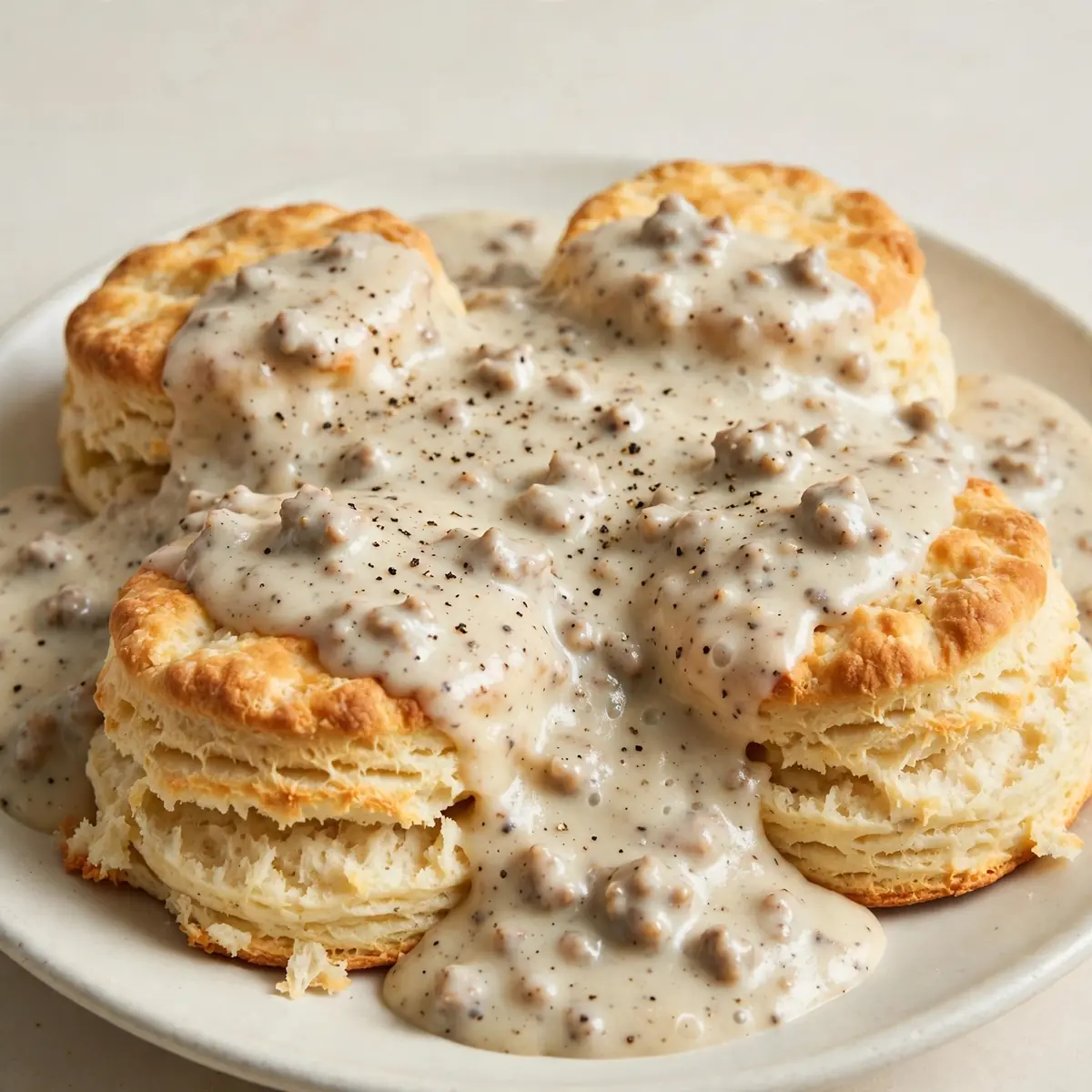
- Assemble and serve. Split the warm biscuits in half and place two halves in each shallow bowl. Ladle the hot gravy and meat generously over the top, letting it soak into the fluffy biscuit centres. Serve immediately while the biscuits are still warm and the gravy is steaming.
Notes
For best results, keep all biscuit ingredients cold and do not twist the cutter. The gravy can be adjusted with extra milk if too thick.