Ingredients
Method
- Prepare the Eggs: Crack the 6 eggs into a medium-sized bowl. Add the double cream (or crème fraîche), salt, and a few grinds of black pepper. Whisk everything together with a fork or a balloon whisk until the yolks and whites are just combined and the mixture is an even yellow colour. Don't over-whisk; you don't want to incorporate too much air.
- Heat the Pan: Place a small, non-stick frying pan over a low heat. It’s crucial the heat is low to prevent the eggs from seizing. Add half of your cold, cubed butter and let it melt slowly until it just begins to foam.
- Start Cooking: Pour the egg mixture into the pan. Let it sit, untouched, for about 20-30 seconds until you see the edges just beginning to set.
- Gently Fold: Using a silicone spatula, begin to gently push the eggs from the outer edge of the pan into the centre. Continue this slow, folding motion, scraping the bottom of the pan as you go. What works best for me is a continuous figure-of-eight motion. Cook for 3-5 minutes.
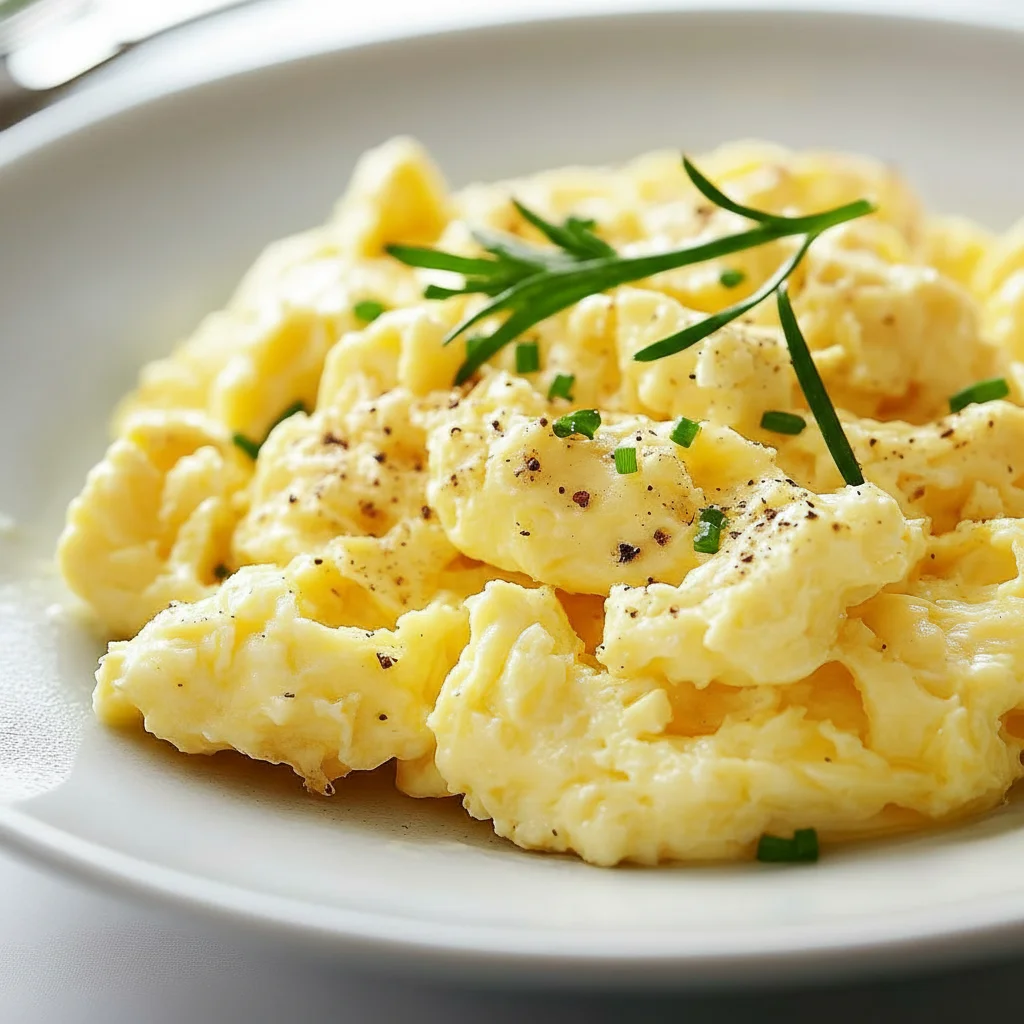
- The Creamy Stage: As the eggs cook, you'll notice small, soft curds forming. Keep the spatula moving gently. The goal is to cook them slowly so they remain soft and custardy. The whole process should take about 5-7 minutes.
- The Final Touch: When the eggs are about 80% cooked—still looking a little wet and glossy but holding their shape—remove the pan from the heat immediately. The residual heat will finish the cooking.
- Add Richness: Add the remaining cold butter cubes, the finely chopped chives, and the grated Gruyère (if using) to the pan. Gently fold them through the eggs. The cold butter stops the cooking and adds an incredible sheen, while the cheese gets gloriously melty.
- Serve Immediately: Taste and adjust seasoning if needed. Serve the scrambled eggs straight away on warm plates or on top of toasted sourdough. Garnish with a final sprinkle of fresh chives.
Notes
Serve immediately on warm plates or toasted sourdough for the best texture and taste. Garnish with extra fresh chives.