Ingredients
Method
- Start the pasta water. Fill your large pot with water, add a generous pinch of salt, and bring it to a rolling boil. Drop in the linguine and cook according to the packet instructions until al dente—usually about 9 to 10 minutes. About two minutes before the pasta is ready, scoop out 120ml of the starchy water with a measuring jug and set it aside. The water should look cloudy and feel slightly viscous between your fingers; that starch is what helps the sauce cling to every strand.
- Season and sear the shrimp. While the pasta boils, pat the shrimp dry with kitchen paper. Toss them with ¼ teaspoon of salt and a pinch of black pepper. Heat 1 tablespoon of olive oil in your large frying pan over a medium-high flame. When the oil shimmers and a single shrimp sizzles on contact, lay the rest in a single layer. Cook for 90 seconds on the first side until the edges turn pink and opaque, then flip and cook for another 60 seconds. The shrimp should be curled slightly and feel firm to the touch. Transfer them to a clean plate—don’t wipe the pan.
- Sweat the aromatics. Reduce the heat to medium and add the remaining 2 tablespoons of olive oil to the same pan. Tip in the diced onion and cook, stirring often, until it turns translucent and smells sweet—about 3 minutes. Add the minced garlic and cook for another 30 seconds, just until you can smell it strongly. If the garlic starts to brown, the pan is too hot; pull it off the heat for a few seconds.
- Build the creamy base. Pour the chicken or vegetable stock into the pan, scraping up any browned bits from the bottom with a wooden spoon. Let it bubble and reduce by half—this takes about 3 minutes. The liquid should look slightly thickened and smell deeply savoury. Stir in the reserved pasta water, then add the butter and let it melt, swirling the pan gently. The sauce will look thin now, but it will thicken in the next step.
- Emulsify with cheese and lemon. Remove the pan from the heat. Add the grated Parmesan in three batches, stirring vigorously after each addition until the cheese is fully melted and the sauce looks silky and pale gold. Squeeze in the lemon juice and sprinkle the zest over the top, then stir once more. The sauce should coat the back of a spoon and have a glossy sheen.
- Combine pasta and shrimp. Drain the linguine (don’t rinse it—you want the starch on the surface) and add it directly to the sauce pan. Use tongs to toss the pasta thoroughly, lifting and turning until every strand is coated in the creamy mixture. The sauce will cling to the pasta rather than pooling at the bottom of the pan. Gently fold in the cooked shrimp, taking care not to break them up. Taste and adjust salt and pepper if needed.
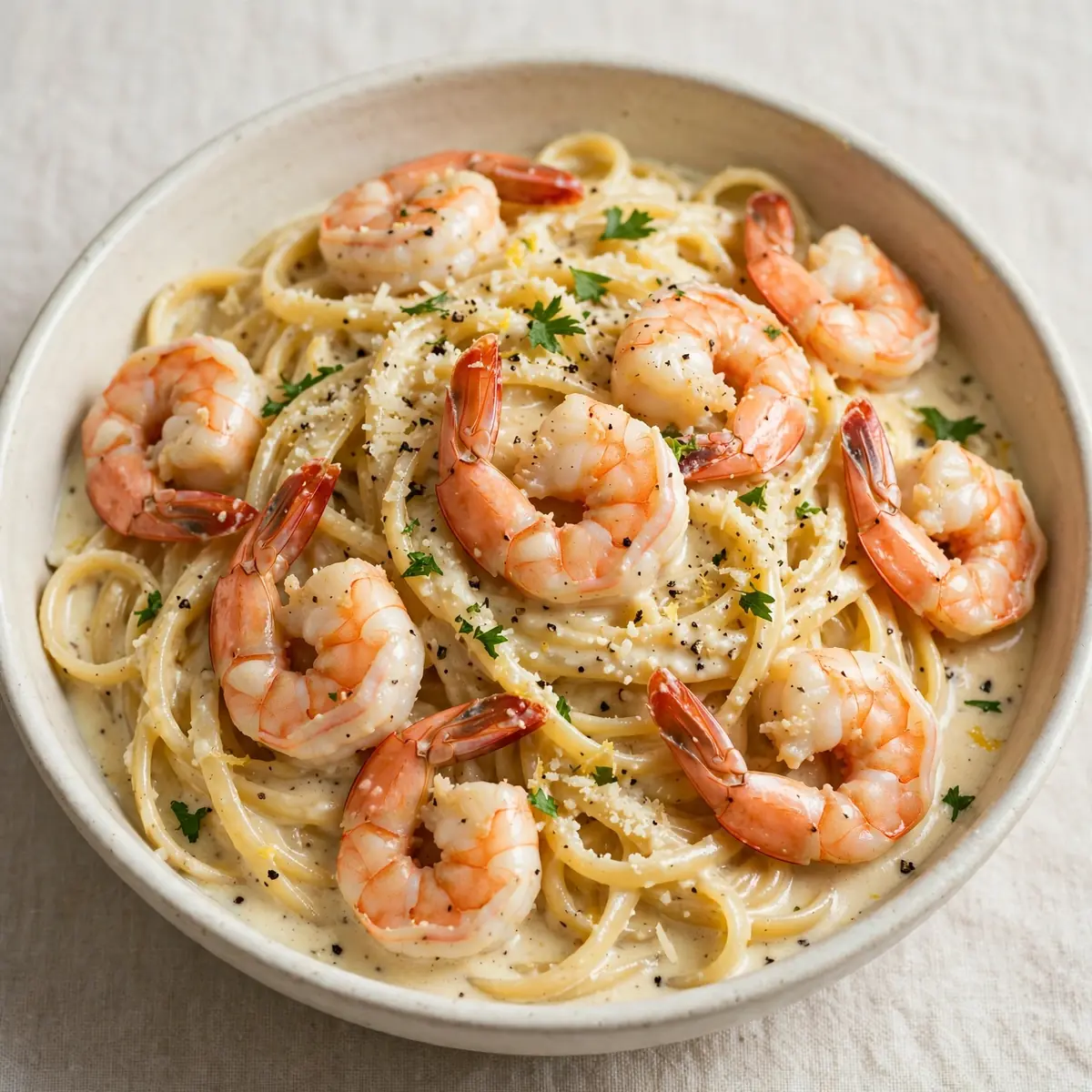
- Serve immediately. Divide the pasta among warm bowls, scatter the chopped parsley over the top, and pass extra Parmesan at the table. The dish should look glossy and inviting, with the shrimp peeking out from the creamy linguine and the lemon zest adding little flecks of brightness.
Notes
Reserve pasta water before draining; it helps emulsify the sauce. Do not rinse the pasta after cooking.