Ingredients
Method
- Prepare the crust. Preheat your oven to 160°C (140°C fan). Place the digestive biscuits in a sealed bag and crush them with a rolling pin until they resemble fine, golden sand. You'll know it's ready when no large chunks remain. Mix the crumbs with the melted butter and sugar until the mixture feels like wet, clumping sand when pressed between your fingers.
- Press and bake the crust. Tip the crumb mixture into a 23cm springform tin lined with parchment paper. Press it firmly and evenly into the base using the bottom of a glass. Bake for 10 minutes until it smells toasty and the edges are just beginning to darken. Set aside to cool while you make the filling. The crust should feel firm and slightly crisp when you touch it.
- Beat the cream cheese. In a large bowl, beat the cream cheese on medium speed for about 2 minutes until it's smooth, silky, and completely lump-free. You should see a glossy sheen develop on the surface. Scrape down the sides and the paddle thoroughly.
- Add the sugar and dry ingredients. Add the sugar, flour, and lemon zest if using. Beat on low speed just until combined. The mixture will look slightly grainy at this stage, but that's fine. Overmixing now will incorporate too much air, which leads to cracks later.
- Incorporate the eggs one at a time. Add the eggs and the extra yolk one by one, mixing on low speed after each addition until just combined. The batter should look thick, pale, and utterly luscious, with a smooth, velvety texture. You should hear a soft, creamy sound as the mixer works, not a sloshing one.
- Add the cream and soured cream. Pour in the double cream and soured cream, then mix on low until the batter is uniform and glossy. It should flow slowly off a spatula, like a thick ribbon. Give it one final scrape down the bowl to ensure everything is incorporated.
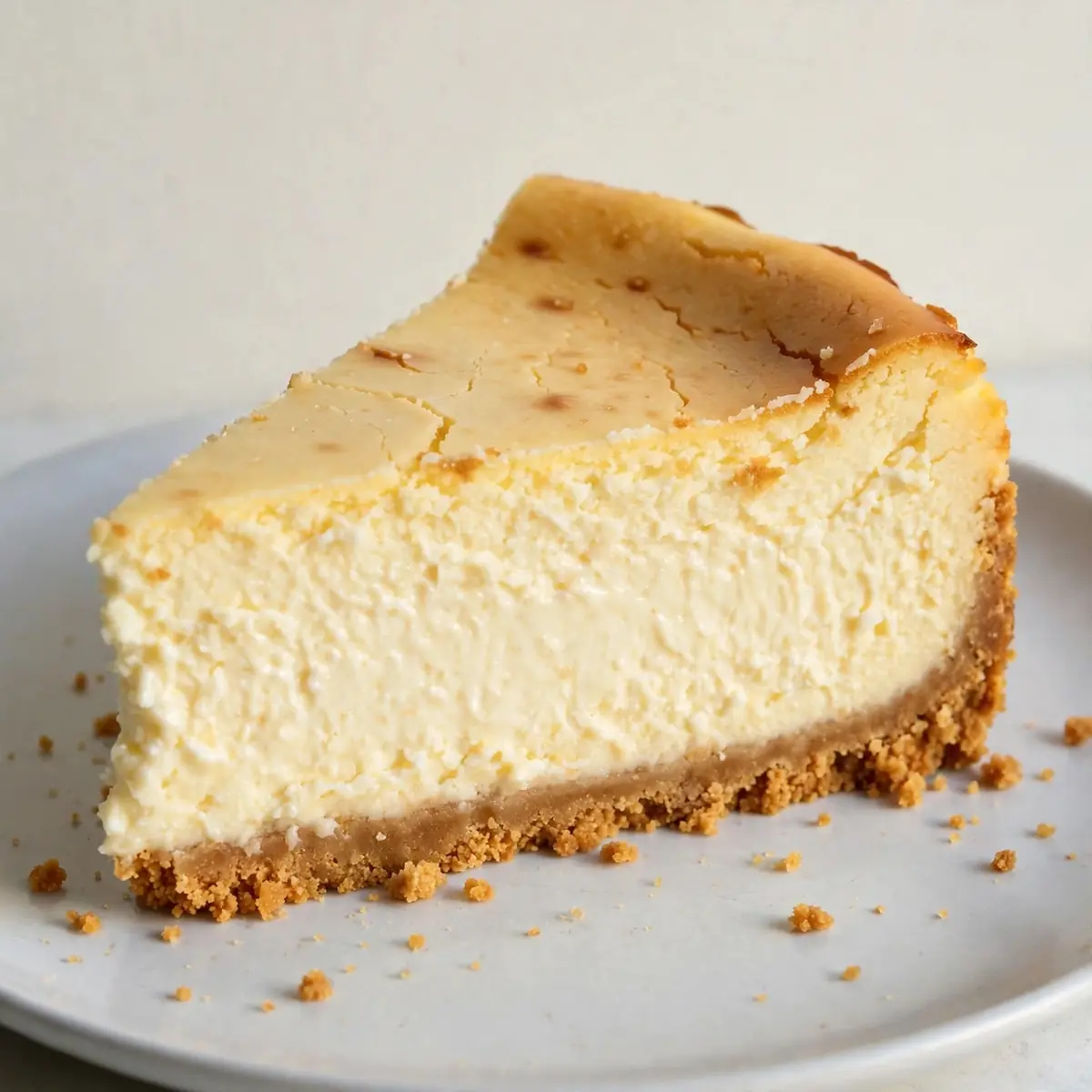
- Bake low and slow. Pour the filling over the cooled crust and gently tap the tin on the counter a few times to release any air bubbles. Bake at 160°C (140°C fan) for 50-55 minutes. The cheesecake is ready when the edges are set and puffed slightly, but the centre still wobbles like a jelly when you gently shake the tin. The top should be a pale, creamy gold, not brown.
- Cool in the oven. Turn the oven off, crack the door open (I wedge a wooden spoon in it), and leave the cheesecake inside for a full hour. This gentle cooling prevents the dreaded cracks. After an hour, transfer the tin to a wire rack to cool completely. You'll hear a faint crackling as it settles. Once at room temperature, refrigerate for at least 4 hours, but overnight is best.
Notes
For best results and to prevent cracks, ensure all dairy ingredients are at room temperature. The long cooling process is crucial for the cheesecake's texture and appearance. Overnight refrigeration is highly recommended for optimal setting and flavor.