Ingredients
Method
- Prepare the glaze: In a small bowl, whisk together the gochujang, honey, rice vinegar, soy sauce, sesame oil, grated garlic, and grated ginger until you have a smooth, deep red paste. The aroma will be pungent, sweet, and savoury all at once.
- Pat the salmon dry: Use kitchen paper to gently pat the salmon fillets completely dry. This step is crucial – a dry surface will help the glaze stick and encourage a beautiful caramelised crust. The fish should feel slightly tacky to the touch.
- Sear the salmon: Heat the neutral oil in a non-stick frying pan over medium-high heat. When the oil shimmers and a drop of water sizzles on contact, carefully place the salmon fillets, skin-side down (if using skin-on fillets). You should hear a satisfying, vigorous sizzle. Cook for 3-4 minutes, until the skin is golden brown and crispy. The flesh will begin to turn opaque from the bottom.
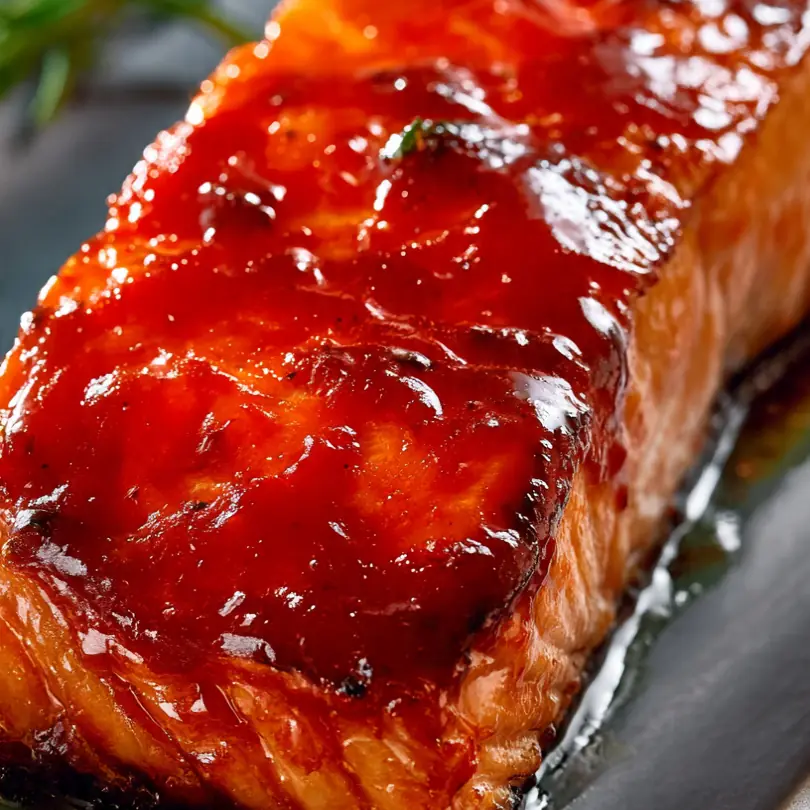
- Flip and glaze: Gently flip the salmon using a fish slice. The seared side should be a deep, appetising gold. Reduce the heat to medium-low. Spoon half of the gochujang glaze over the top of each fillet, spreading it evenly. The glaze will look thick and glossy against the pale pink flesh.
- Finish in the pan: Cook for another 3-5 minutes, depending on the thickness of your fillets. The glaze will bubble and thicken, becoming sticky and aromatic. The salmon is done when it flakes easily with a fork and the centre is just cooked through – look for a translucent, coral-pink centre that is no longer raw.
- Rest and serve: Remove the pan from the heat. Let the salmon rest in the pan for 1-2 minutes. This allows the juices to redistribute. Transfer the fillets to serving plates, spoon any remaining glaze from the pan over the top, and garnish with sliced spring onion and toasted sesame seeds.
Notes
Adjust the amount of gochujang to control spiciness. Serve with steamed rice and vegetables for a complete meal.