Meal Prep Breakfast Bowls You Can Freeze
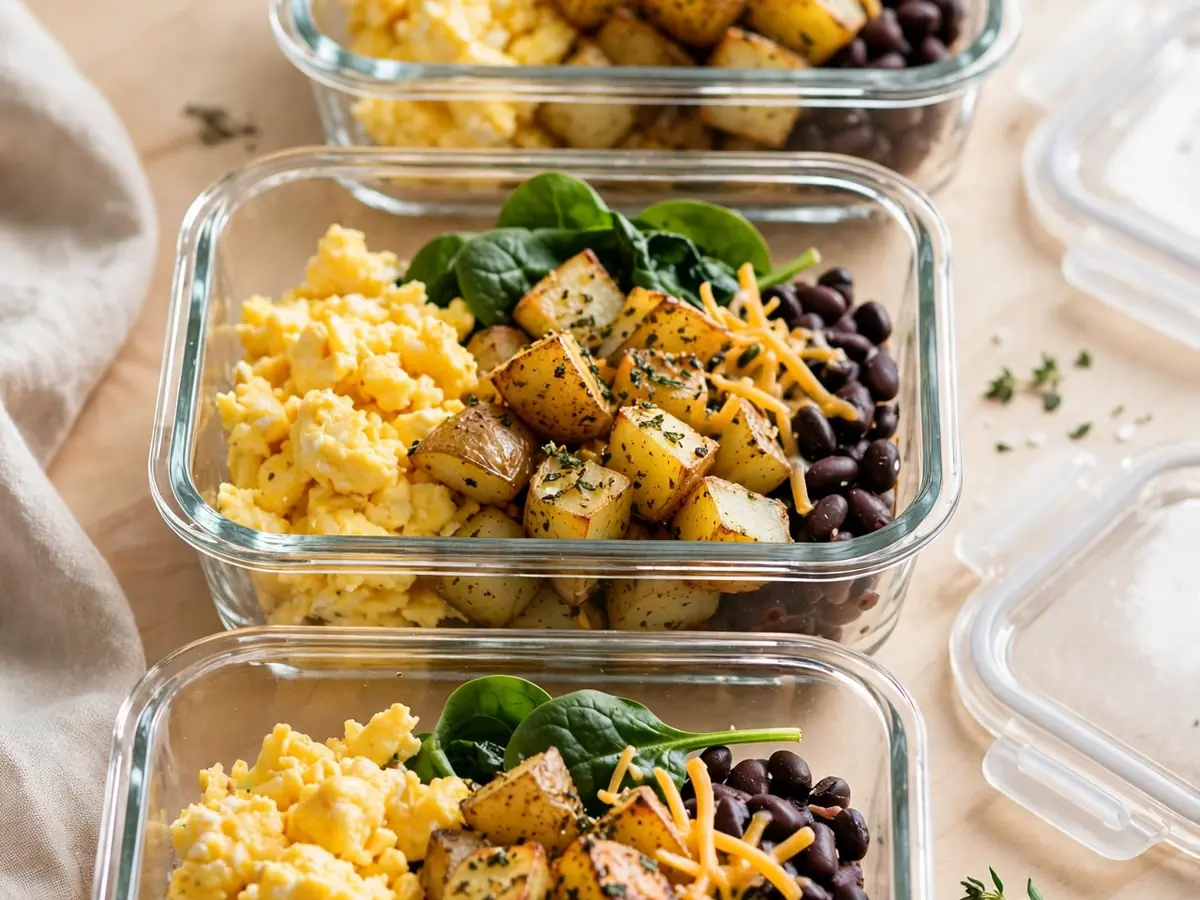
Mornings are busy, and the gap between “I should eat something” and “I’m already late” is where good intentions usually collapse. Freezer breakfast bowls solve that problem: they’re assembled in advance, portioned into single servings, and built to go straight from the freezer to the microwave. Unlike a tray of baked oatmeal that serves a crowd, these are individual bowls you can grab one at a time, which means variety and flexibility without extra work on any given morning. Below are four complete, distinct freezer breakfast bowl recipes — a savory egg-and-potato bowl, a sweet protein-packed oatmeal bowl, a Tex-Mex egg bowl, and a plant-based quinoa bowl — plus the equipment, techniques, and storage rules that make freezing breakfast food actually work.
Why Breakfast Bowls Freeze Well (and What Doesn’t)
Freezing works best with foods that hold their texture after thawing. Eggs cooked softly, potatoes, cooked grains, roasted vegetables, beans, and sauces all freeze reliably. The foods that fail are the ones with high water content or delicate structure: raw salad greens, cucumber, fresh herbs used as a garnish, and dairy-heavy mixtures that can separate.
A few principles keep quality high:
- Undercook slightly. Eggs should be just set, not dry; grains should be a touch firmer than you’d eat them fresh, since reheating softens them further.
- Cool completely before freezing. Warm food creates condensation and ice crystals that make everything watery.
- Portion before freezing, not after. Freezing a large batch and dividing it later means reheating more than you need and wasting the rest.
- Keep wet and dry components separate when possible. A small compartment or a layer of parchment between a saucy component and a crunchy one preserves texture.
Equipment You’ll Need
- 12-cup standard muffin tin (optional, for egg bites variation)
- Large skillet (12-inch) with lid
- Medium saucepan with lid
- Rimmed sheet pan
- Mixing bowls (medium and large)
- Freezer-safe containers: 2-cup (500 ml) rectangular glass or BPA-free plastic containers with lids, or 16-ounce (450 g) wide-mouth freezer jars
- Parchment paper
- Ice cube tray (optional, for sauce portions)
- Instant-read thermometer (optional but useful for egg safety)
- Labels and a marker
For a batch-cooking session that spans multiple recipes, a collection of make-ahead recipes is a useful companion for planning the week.
Recipe 1: Savory Sausage, Egg & Potato Breakfast Bowls
Servings: 6 bowls | Prep time: 20 minutes | Cook time: 35 minutes | Freeze: up to 3 months
Ingredients
- 1 lb (450 g) Yukon Gold potatoes, cut into ½-inch cubes (about 3 cups)
- 2 tbsp (30 ml) olive oil, divided
- 1 tsp (3 g) kosher salt, divided
- ½ tsp (1 g) black pepper, divided
- 1 lb (450 g) bulk breakfast sausage, casings removed
- 1 medium yellow onion, diced (about 1 cup / 150 g)
- 1 red bell pepper, diced (about 1 cup / 150 g)
- 12 large eggs
- ¼ cup (60 ml) whole milk
- 1 cup (100 g) shredded sharp cheddar cheese
- 2 scallions, thinly sliced (for garnish after reheating, optional)
Instructions
- Preheat the oven to 425°F (220°C). Toss the diced potatoes with 1 tbsp (15 ml) olive oil, ½ tsp salt, and ¼ tsp pepper on a rimmed sheet pan. Roast for 25–30 minutes, stirring once at the halfway point, until golden and tender. Remove and cool.
- While the potatoes roast, heat the remaining 1 tbsp (15 ml) olive oil in a large skillet over medium heat. Add the sausage and cook, breaking it into crumbles, for 6–8 minutes until no pink remains. Transfer to a bowl with a slotted spoon, leaving the fat behind.
- Add the onion and bell pepper to the same skillet. Cook over medium heat for 5–6 minutes until softened. Return the sausage to the pan, stir to combine, and remove from heat.
- In a large bowl, whisk the eggs with the milk and the remaining ½ tsp salt and ¼ tsp pepper. Pour into a clean nonstick skillet over low heat and scramble gently for 5–7 minutes, until just set and still glossy. Do not overcook — the eggs will finish cooking during reheating.
- Line up six 2-cup freezer containers. Divide the roasted potatoes evenly among them (about ½ cup each), then layer the sausage-vegetable mixture (about ½ cup each), then the scrambled eggs (about ⅔ cup each). Top each with about 2½ tbsp (15 g) cheddar.
- Cool uncovered at room temperature for no more than 30 minutes, then seal, label with the date, and freeze flat.
Reheating: From frozen, microwave on high for 2 minutes, stir, then continue in 30-second bursts until steaming hot throughout (165°F / 74°C). From thawed (refrigerator overnight), 60–90 seconds. Add scallions after reheating.
Substitutions: Swap sausage for turkey sausage or crumbled tofu; use sweet potato in place of Yukon Gold (add 5 minutes roasting time); replace cheddar with Gruyère or pepper Jack.
Recipe 2: Apple-Cinnamon Protein Oatmeal Bowls
Servings: 5 bowls | Prep time: 10 minutes | Cook time: 15 minutes | Freeze: up to 2 months
Ingredients
- 2 cups (180 g) old-fashioned rolled oats (not instant)
- 2½ cups (600 ml) whole milk or unsweetened oat milk
- 1 cup (240 ml) water
- 2 medium apples (about 300 g), peeled and grated
- 2 tbsp (30 ml) pure maple syrup
- 1 tsp (3 g) ground cinnamon
- ¼ tsp (1 g) ground nutmeg
- ¼ tsp (1.5 g) fine salt
- 2 tbsp (16 g) chia seeds
- ¼ cup (30 g) chopped walnuts, plus extra for topping
- 1 tsp (5 ml) vanilla extract
Instructions
- Combine the oats, milk, water, grated apple, maple syrup, cinnamon, nutmeg, and salt in a medium saucepan. Stir once.
- Bring to a gentle simmer over medium heat, then reduce to low and cook for 8–10 minutes, stirring frequently, until thick and creamy.
- Remove from heat and stir in the chia seeds, walnuts, and vanilla. The mixture should be slightly looser than you’d want to eat fresh, since it thickens considerably when chilled.
- Divide among five 2-cup containers (about ¾ cup / 200 g each). Cool for 20 minutes, then seal and freeze.
- To serve, reheat from frozen with 2 tbsp (30 ml) of milk stirred in to loosen, then top with sliced banana, extra walnuts, or a spoonful of nut butter.
Substitutions: Use gluten-free certified oats if needed; replace walnuts with pecans or pumpkin seeds; for a dairy-free version, use oat milk and check that your maple syrup is pure.
Recipe 3: Tex-Mex Black Bean & Egg Bowls
Servings: 6 bowls | Prep time: 15 minutes | Cook time: 25 minutes | Freeze: up to 3 months
Ingredients
- 1 tbsp (15 ml) olive oil
- 1 medium red onion, diced (about 1 cup / 150 g)
- 1 jalapeño, seeded and minced (about 1 tbsp)
- 2 cloves garlic, minced
- 2 cans (15 oz / 425 g each) black beans, drained and rinsed (about 3 cups)
- 1 tsp (3 g) ground cumin
- 1 tsp (3 g) smoked paprika
- ½ tsp (1.5 g) kosher salt
- 1 cup (160 g) frozen corn kernels
- 1 cup (180 g) cooked long-grain rice (from about ⅓ cup / 65 g dry)
- 10 large eggs
- ⅓ cup (80 ml) whole milk
- 1 cup (100 g) shredded Monterey Jack cheese
- ¼ cup (60 g) salsa, plus extra for serving
- Fresh cilantro, chopped (garnish after reheating, optional)
Instructions
- Heat the olive oil in a large skillet over medium heat. Add the red onion and jalapeño and cook for 4–5 minutes until softened. Add the garlic and cook 30 seconds more.
- Stir in the black beans, cumin, smoked paprika, and salt. Cook for 5 minutes, mashing about a quarter of the beans with the back of a spoon to thicken the mixture. Stir in the corn and cook 2 minutes more. Remove from heat.
- Cook the rice according to package directions and set aside to cool.
- Whisk the eggs with the milk. Scramble in a nonstick skillet over low heat for 5–6 minutes until softly set.
- Divide the rice among six containers (about 3 tbsp each), then the bean mixture (about ½ cup each), then the eggs (about ½ cup each). Top each with about 2½ tbsp (15 g) cheese and 2 tsp (10 g) salsa.
- Cool, seal, label, and freeze flat.
Reheating: Microwave from frozen for 2–2½ minutes, stirring once at the halfway point, until 165°F (74°C). Top with fresh cilantro and extra salsa.
Substitutions: Pinto beans work equally well; use brown rice for extra fiber; omit the cheese and add an extra 2 tbsp salsa per bowl for a dairy-free version.
Recipe 4: Plant-Based Quinoa & Roasted Vegetable Bowls
Servings: 5 bowls | Prep time: 15 minutes | Cook time: 30 minutes | Freeze: up to 2 months
Ingredients
- 1 cup (170 g) dry quinoa, rinsed
- 2 cups (480 ml) vegetable broth
- 1 medium sweet potato (about 12 oz / 340 g), cut into ½-inch cubes
- 1 medium zucchini (about 8 oz / 225 g), cut into ½-inch half-moons
- 1 red bell pepper, cut into 1-inch pieces
- 2 tbsp (30 ml) olive oil
- ¾ tsp (2 g) kosher salt, divided
- ½ tsp (1 g) black pepper
- 1 tsp (3 g) dried oregano
- 1 can (15 oz / 425 g) chickpeas, drained and rinsed (about 1½ cups)
- ½ cup (120 g) hummus, for serving
- Lemon wedges, for serving
Instructions
- Preheat the oven to 425°F (220°C). Toss the sweet potato, zucchini, and bell pepper with olive oil, ½ tsp salt, pepper, and oregano on a rimmed sheet pan. Roast for 25–30 minutes, stirring once, until the sweet potato is tender and the edges are browned. Add the chickpeas to the pan during the last 8 minutes of roasting.
- Meanwhile, combine the quinoa, vegetable broth, and remaining ¼ tsp salt in a medium saucepan. Bring to a boil, cover, reduce heat to low, and simmer for 15 minutes. Remove from heat and let stand, covered, for 5 minutes. Fluff with a fork and cool.
- Divide the quinoa among five 2-cup containers (about ¾ cup each), then top with the roasted vegetables and chickpeas (about 1 cup each).
- Freeze the hummus separately: portion 1½ tbsp (25 g) into each cup of an ice cube tray, freeze until solid, then pop one cube into each container before sealing. Alternatively, add hummus fresh after reheating.
- Cool, seal, label, and freeze flat.
Reheating: Microwave from frozen for 2–2½ minutes, stirring once, until hot. Serve with a lemon wedge and, if you froze it separately, a fresh spoonful of hummus.
Substitutions: Use farro or brown rice instead of quinoa; swap chickpeas for white beans or roasted tofu cubes; replace zucchini with broccoli florets (add 5 minutes roasting time).
Storage and Food Safety Guidance
- Cooling: Cool cooked components within 2 hours of cooking and refrigerate or freeze promptly. Never freeze food that has been sitting out longer than 2 hours.
- Containers: Leave ½ inch (1 cm) of headspace in glass containers to allow for expansion. Wide-mouth jars and 2-cup rectangular containers stack efficiently.
- Freezer life: Egg-based bowls keep best for up to 3 months; grain and oatmeal bowls for up to 2 months. Label everything with the recipe name and freeze date.
- Thawing: For best texture, thaw overnight in the refrigerator. Bowls can be reheated directly from frozen, but add 1–2 extra minutes and stir midway.
- Reheating safety: Reheat to 165°F (74°C) throughout. Microwaves heat unevenly, so stir once and let the bowl stand for 1 minute before eating.
- Refreezing: Do not refreeze a bowl that has already been reheated.
Tips for Better Freezer Breakfast Bowls
- Batch components, not just bowls. Roast potatoes and vegetables, cook grains, and scramble eggs in separate batches, then assemble assembly-line style. It’s faster and lets you mix and match flavors.
- Salt slightly less than you would fresh. Freezing mutes seasoning a little, but oversalting is harder to fix than adding a pinch at the table.
- Use a muffin tin for egg portions. If you prefer not to scramble, bake eggs in a greased 12-cup muffin tin at 350°F (175°C) for 18–20 minutes, then freeze the cooled egg rounds and drop two into each bowl.
- Keep garnishes out of the freezer. Fresh herbs, avocado, and crunchy toppings should be added after reheating.
- Freeze flat first. Lay containers flat until solid, then stack them upright to save shelf space.
- Plan a rotation. Making two recipes per session — one savory, one sweet — gives you variety without doubling your work. For a weekend baking project to round out breakfasts, try these sheet pan pancakes for a crowd, which also freeze well in portions.
Frequently Asked Questions
Can you freeze scrambled eggs for breakfast bowls?
Yes. Scrambled eggs freeze well if they are cooked until just set and still slightly glossy. Overcooked eggs turn rubbery and watery after thawing. Cool them completely before adding to containers, and reheat gently, stirring once midway, until steaming hot.
How long do freezer breakfast bowls last?
Egg-based bowls keep for up to 3 months at 0°F (-18°C); oatmeal, quinoa, and grain-based bowls are best within 2 months. Always label containers with the recipe name and date, and use the oldest bowls first.
Do I need to thaw breakfast bowls before reheating?
No. They can go straight from the freezer to the microwave. Reheat on high for 2–2½ minutes, stir once at the halfway point, and continue in 30-second bursts until the center reaches 165°F (74°C). Thawing overnight in the refrigerator improves texture and shortens reheating to 60–90 seconds.
What containers are best for freezing breakfast bowls?
Use freezer-safe 2-cup (500 ml) rectangular glass or BPA-free plastic containers with tight-fitting lids, or 16-ounce wide-mouth freezer jars. Glass is best for avoiding stains and odors but needs ½ inch of headspace for expansion. Avoid thin takeout containers, which crack and don’t seal well.
Can I make these breakfast bowls dairy-free?
Yes. Replace milk with unsweetened oat or almond milk, swap cheese for a dairy-free shredded alternative or omit it, and check that sausages and broths are dairy-free. The quinoa and vegetable bowl is naturally dairy-free if you serve the hummus fresh or frozen separately.
Why did my frozen breakfast bowl turn watery?
Wateriness usually comes from freezing warm food, using vegetables with high water content (like zucchini) without roasting them first, or reheating without stirring. Cool components fully, roast watery vegetables to drive off moisture, and stir once during reheating. A brief rest after microwaving also helps liquids reincorporate.