How to Make a Roux for Sauces and Soups
A roux is one of the most quietly powerful techniques in home cooking. It is simply flour cooked in fat, yet that modest combination can thicken a silky pan sauce, give body to a hearty gumbo, or turn milk and cheese into macaroni sauce that clings to every noodle. Once you understand how roux works — and how far to take the color — a whole category of soups, stews, and sauces becomes accessible without a recipe card.
This guide walks through the fundamentals: the right fat-to-flour ratio, the difference between white, blond, and dark roux, and how to add liquid so the mixture stays smooth instead of lumpy. You will find precise quantities, a step-by-step method, practical substitutions, storage guidance, and answers to the questions cooks ask most often.
What Is a Roux, Exactly?
A roux is a cooked mixture of equal parts fat and flour by weight, used to thicken liquids. The flour’s starch granules absorb the hot fat, which coats them and keeps them from clumping when liquid is introduced. As the mixture heats in liquid, the starch granules swell and burst, releasing starch molecules that trap water and create viscosity.
Two details matter more than any other. First, weigh your ingredients if you can — equal parts by weight is the reliable standard, and flour and butter do not have the same volume-to-weight ratio. Second, cook the flour long enough to eliminate its raw, pasty taste. A white roux needs only about 2 minutes; a dark roux needs 20 to 45 minutes of patient stirring.
The classic ratio is 1:1 fat to flour by weight. For a medium-thick sauce, plan on roughly 1 ounce (28 g) each of fat and flour per 1 cup (240 ml) of liquid. For a thin soup base, use half that; for a sturdy gravy or cheese sauce, use up to double.
Equipment You Will Need
- A heavy-bottomed saucepan or skillet — cast iron, enameled cast iron, or thick stainless steel. Thin pans scorch dark roux quickly.
- A flat-edged wooden spoon or silicone spatula for constant stirring.
- A kitchen scale for accurate 1:1 measurements.
- A wire whisk for incorporating liquid.
- Oven mitts if you plan to toast flour in the oven (an optional low-effort method for dark roux).
- A clean jar with a lid for storing leftover roux.
Roux Color Guide: White, Blond, and Dark
The color of your roux determines both its thickening power and its flavor. As flour cooks, starch molecules break down and brown, which means darker roux thickens less but tastes deeper and nuttier.
- White roux (about 2 minutes): Pale ivory, mild flavor, maximum thickening power. Use for béchamel, cheese sauce, clam chowder, and cream soups.
- Blond roux (about 5 to 8 minutes): Light golden, faint toasted aroma. Ideal for velouté, chicken pot pie filling, and light gravies.
- Medium brown roux (about 12 to 18 minutes): Peanut-butter brown, nutty flavor. Good for richer gravies and étouffée.
- Dark roux (about 25 to 45 minutes): Deep chocolate brown, intensely toasted, lowest thickening power. Essential for gumbo and dark Cajun stews. Expect to use more of it — often 1 cup of roux for 6 to 8 cups of stock.
Dark roux is the one place where home cooks most often fail, and the reason is heat. Once the flour reaches a certain darkness, it can go from perfect to burnt in under a minute. Lower the heat as the color deepens, stir without pause, and have your liquid or a heatproof bowl ready before you begin.
Step-by-Step: Making a Roux for Sauces and Soups
Yield: about ½ cup (120 ml) of roux, enough to thicken 4 cups (960 ml) of liquid to a light sauce consistency, or 2 cups (480 ml) to a thick sauce. Prep time: 2 minutes. Cook time: 2 to 45 minutes depending on desired color.
Ingredients:
- 4 tablespoons (56 g) unsalted butter, or ¼ cup (56 g) neutral oil, bacon fat, or clarified butter
- ½ cup (60 g) all-purpose flour
- Pinch of kosher salt (optional; omit if using salted butter)
Instructions:
- Set a heavy-bottomed saucepan over medium heat. Add the butter or oil and let it melt or shimmer, about 1 minute. Do not let it smoke.
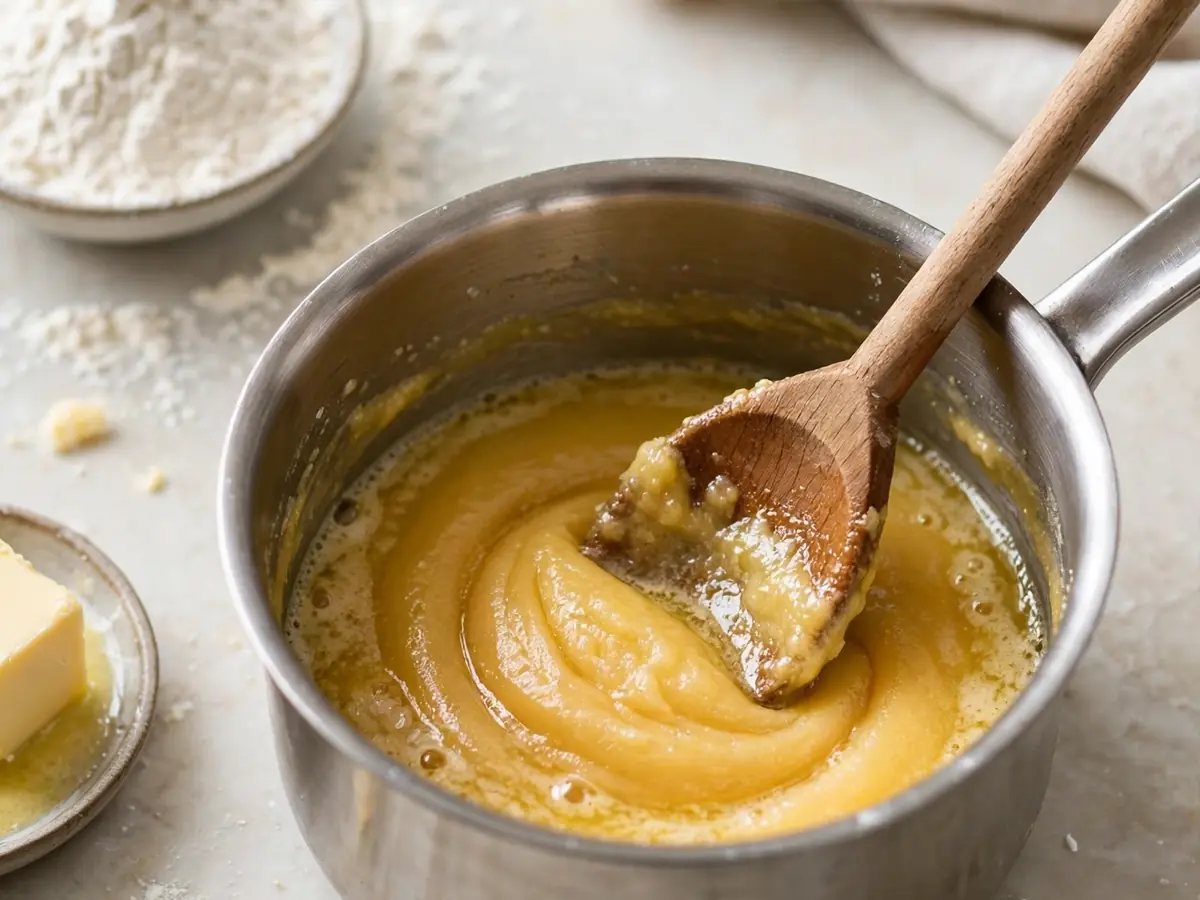
- Add the flour all at once and immediately begin stirring with a wooden spoon or spatula. The mixture will look like wet sand or thick paste.
- Stir continuously, scraping the bottom and corners of the pan, for 2 minutes for a white roux. The raw flour smell should fade and the mixture should bubble gently.
- For a blond roux, continue stirring 3 to 6 more minutes until the paste turns pale gold and smells faintly of toasted bread. Reduce the heat to medium-low if it darkens too fast.
- For a brown or dark roux, keep stirring — every 10 to 15 seconds at minimum — for 12 to 45 minutes. Lower the heat incrementally as the color deepens. If you see black specks, the roux has burned; discard it and start over, because burnt roux will make the whole dish bitter.
- Remove the pan from the heat the moment the roux reaches your target color. It will continue to darken slightly from residual heat.
- To use immediately, let the roux cool for 1 to 2 minutes, then add your liquid in a slow, steady stream while whisking constantly. Add no more than ½ cup (120 ml) at a time at first, whisking until smooth before adding more.
- Return the pan to medium heat and simmer the sauce or soup, whisking occasionally, for 5 to 10 minutes until it thickens and the raw flour flavor is gone. Season to taste.
Timing note: A white roux needs only 2 minutes of cooking, but the sauce it thickens should still simmer 5 to 10 minutes so the starch fully hydrates. Rushing this step is why some sauces taste like paste.
The Hot-Roux and Cold-Liquid Rule
Lumps form when flour particles clump together before they can disperse. The most reliable prevention is temperature contrast: add cold liquid to a hot roux, or hot liquid to a cold roux. Never add hot liquid to a hot roux in a thin stream — the starch seizes and you get dumplings instead of sauce.
If you are making a soup and your roux is already hot in the pot, ladle in room-temperature or chilled stock a little at a time, whisking hard between additions. Once you have added about a third of the liquid and the mixture is smooth, you can add the rest more confidently.
Practical Substitutions
- Fat: Butter gives the best flavor but browns quickly. Neutral oils (canola, grapeseed) are more forgiving for dark roux. Bacon fat, duck fat, or clarified butter all work and add character. Do not use extra-virgin olive oil for high-heat dark roux; it smokes too soon.
- Flour: All-purpose flour is standard. Bread flour works but thickens slightly more. Whole wheat flour produces a nuttier, grittier roux. Gluten-free blends can work but often need 10 to 20 percent more flour by weight and may not thicken as reliably.
- Dairy-free: Use any neutral oil or plant-based butter. The technique is identical.
- No flour on hand: Cornstarch and arrowroot are not roux substitutes — they are slurries, added cold to hot liquid. They thicken but do not brown or develop toasted flavor.
Storage and Make-Ahead Guidance
Roux keeps remarkably well, which makes it worth making in batches. Cool it completely, then transfer to a clean glass jar with a tight lid.
- Refrigerator: up to 1 month. Butter-based roux will solidify; scoop it with a spoon and whisk it into hot liquid.
- Freezer: up to 3 months. Freeze in 1-tablespoon portions on a parchment-lined tray, then transfer the solid portions to a freezer bag. Drop a frozen cube directly into simmering soup or sauce and whisk until dissolved.
- Room temperature: not recommended for butter-based roux; oil-based roux can sit covered for a few hours but refrigeration is safer.
Reheat stored roux gently before adding liquid, or use the cold-roux method: whisk cold roux into hot stock one spoonful at a time, returning the pot to a simmer between additions.
Tips for Consistent Results
- Weigh the flour and fat. Volume measurements drift, and a roux that is too floury tastes chalky.
- Stir with a flat-edged tool, not a round spoon — you want to lift the flour off the bottom of the pan where it burns first.
- Keep a heatproof bowl nearby for dark roux. If the pan gets too hot, pour the roux into the bowl to stop the cooking instantly.
- Season the finished sauce, not the roux. Salt added early can scorch.
- If a sauce thickens too much as it sits, loosen it with a splash of stock or milk rather than water — water dilutes flavor.
- If a sauce is too thin, simmer it uncovered for a few minutes, or make a small additional roux and whisk it in.
- To rescue a lumpy sauce, strain it through a fine-mesh sieve and return it to the pan. It is faster than whisking endlessly.
Where Roux Fits in Everyday Cooking
Once the technique is familiar, roux becomes a building block rather than a recipe. A white roux plus warm milk makes béchamel; add cheese and you have a cheese sauce for pasta or vegetables. A blond roux plus chicken stock makes velouté, the base for pot pie and many pan gravies. A dark roux plus stock, the “holy trinity” of onion, celery, and bell pepper, and andouille sausage is the backbone of gumbo.
For more everyday cooking inspiration, browse the Cuisinebite blog, where technique-driven recipes sit alongside family-friendly comfort food. If you enjoy baking projects that balance savory skills, the lemon crumb bars recipe is a good zesty dessert to try once your sauce game is solid.
Frequently Asked Questions About Making a Roux
Why did my roux turn into lumps when I added the liquid?
Almost always, the problem is temperature. Adding hot liquid to a hot roux causes the starch to clump before it can disperse. Use the temperature-contrast rule: cold liquid into hot roux, or hot liquid into cold roux. Add the liquid in small amounts at first — no more than ½ cup at a time — and whisk constantly, scraping the bottom and edges of the pan. If lumps still form, strain the sauce through a fine-mesh sieve and return it to the heat.
How much roux do I need to thicken a pot of soup?
A useful baseline is 1 ounce (28 g) each of flour and fat per 1 cup (240 ml) of liquid for a medium-thick sauce. For soup, start lighter: ½ ounce (14 g) each per cup, then adjust. Remember that dark roux thickens less than white roux, so a gumbo may need nearly double the roux of a cream soup for the same body. Add roux gradually and let the soup simmer 5 to 10 minutes before judging the final thickness.
Can I make a roux without butter or with gluten-free flour?
Yes to both. Any neutral oil, bacon fat, duck fat, or plant-based butter can replace dairy butter at the same weight. For gluten-free flour, use a 1:1 all-purpose gluten-free blend and increase the flour by roughly 10 to 20 percent by weight, since these blends often contain starches that thicken differently. Cook and stir exactly as directed, and test the consistency after a full 10-minute simmer before adding more.
How do I know when a dark roux is done, and can I save it if it burns?
Dark roux is ready when it is the color of dark chocolate and smells toasted and nutty, not acrid. Watch for the first wisps of smoke and lower the heat immediately. If you see black flecks or smell a sharp, bitter burnt note, discard the roux — the bitterness will spread through the entire dish and cannot be masked. To avoid the risk, stir constantly, use a heavy pan, and pull the pan off the heat a shade lighter than your target, since residual heat continues the browning.
Can I make roux ahead of time and store it?
Absolutely — roux is an excellent make-ahead component. Cool it completely and refrigerate in a sealed glass jar for up to 1 month, or freeze in 1-tablespoon portions for up to 3 months. Cold or frozen roux can be whisked directly into simmering stock or sauce a spoonful at a time, which is a convenient way to thicken soups at the last minute without dirtying another pan.