The Best Way to Reheat Leftovers Without Drying Them Out
Leftovers are one of the quiet heroes of a well-run kitchen. A pot of chili on Sunday becomes Tuesday’s dinner; a roasted chicken stretches into sandwiches and salads; a tray of rice saves a frantic weeknight. Yet the moment you reheat that food, something often goes wrong. The chicken turns to sawdust, the rice hardens into pebbles, the pizza crust becomes cardboard, and the salmon releases a sad, rubbery sigh. The problem is rarely the food itself — it is the method.
Reheating is not simply “make it hot again.” Heat changes the structure of proteins, starches, and fats, and the wrong environment — too much dry air, too much direct heat, too little moisture — drives water out of food faster than the food can recover it. The best way to reheat leftovers without drying them out is to match the method to the food: gentle, moist, covered heat for proteins and grains; dry, high heat for anything that needs its crust revived; and a little added moisture or fat almost everywhere. This guide breaks down exactly how to do that, with precise quantities, equipment, timings, and storage guidance you can rely on.
Why Leftovers Dry Out in the First Place
Understanding the mechanism makes the fixes obvious. When food is cooked, proteins denature and squeeze out water; when it cools in the refrigerator, starches retrograde and firm up, and fats solidify. Reheating reverses some of this, but only if you give the food a chance. A microwave blasts water molecules into steam quickly, and if the food is uncovered, that steam escapes, leaving the surface dry and the interior unevenly hot. An oven at high heat without a cover creates a dry-air environment that pulls moisture from the surface. A skillet over high heat can scorch the outside before the center warms.
The solution is twofold: trap moisture (lids, covers, splashes of liquid) and use moderate, even heat so the center catches up to the surface. A few drops of water, a damp paper towel, a pat of butter, or a splash of stock can be the difference between revived and ruined.
The Core Equipment You Actually Need
You do not need a drawer full of gadgets, but a handful of tools make reheating dramatically more reliable:
- A microwave-safe glass or ceramic container with a fitted lid (glass heats evenly and does not hold odors).
- A microwave-safe splatter cover or, in a pinch, parchment paper.
- A small spray bottle filled with water for misting grains and breads.
- A heavy skillet with a tight-fitting lid, ideally 10 to 12 inches (25 to 30 cm).
- A rimmed sheet pan lined with parchment paper.
- Aluminum foil, for tenting.
- An instant-read thermometer, the single best tool for knowing when proteins are safely and gently warmed.
General Rules That Apply to Almost Everything
Before the food-by-food breakdown, internalize these five principles:
- Reheat only what you will eat. Every reheat cycle costs moisture and quality. Portion out servings rather than reheating the whole batch.
- Go lower and slower than you think. Medium power on the microwave, 325°F (165°C) in the oven, and medium-low on the stovetop all warm food through without blasting it dry.
- Add moisture deliberately. One to two tablespoons (15–30 ml) of water, stock, or sauce per serving of grains or protein; a light mist for bread and pizza.
- Cover whenever the food is not meant to be crisp. Steam is your ally for proteins, rice, pasta, and casseroles.
- Let it rest. Two to three minutes covered after heating lets the temperature equalize so the center is as warm as the edges.
How to Reheat Chicken and Other Lean Proteins
Lean proteins such as chicken breast, turkey, and pork loin are the most prone to drying out because they contain little fat to protect them. The goal is gentle, humid heat.
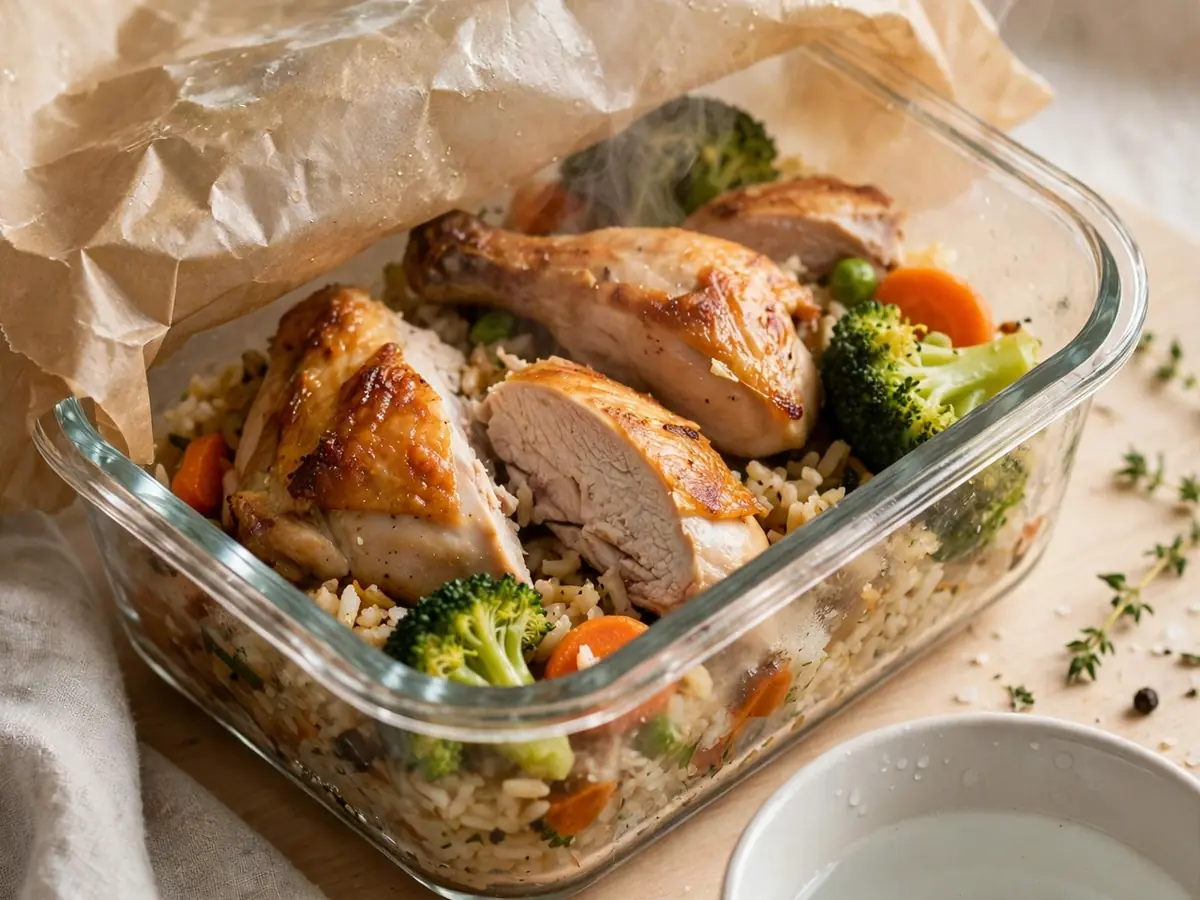
Microwave method (best for speed): Place sliced or whole portions in a microwave-safe dish. Add 1 tablespoon (15 ml) of water, stock, or sauce per serving. Cover with a lid or damp paper towel. Heat at 50 percent power in 30-second intervals, checking after each, until the internal temperature reaches 165°F (74°C) — usually 1½ to 2½ minutes total for a 6-ounce (170 g) breast. Let rest covered for 2 minutes.
Skillet method (best for texture): Add 1 teaspoon (5 ml) of neutral oil and 2 tablespoons (30 ml) of water or stock to a lidded skillet over medium-low heat. Add the chicken, cover, and cook for 3 to 4 minutes, flipping once, until heated through. The steam trapped under the lid keeps the meat tender while the pan bottom prevents sogginess.
Oven method (best for larger batches): Arrange portions in a baking dish, add 2 tablespoons (30 ml) of stock per serving, cover tightly with foil, and bake at 325°F (165°C) for 12 to 18 minutes, depending on thickness, until the center registers 165°F (74°C).
Rice, Pasta, and Other Cooked Grains
Refrigerated rice firms up because of starch retrogradation, and dry heat makes it worse. The fix is steam and a little patience.
Rice: For 1 cup (about 200 g) of cooked rice, add 1 tablespoon (15 ml) of water to a microwave-safe bowl, cover, and microwave at full power for 60 to 90 seconds. Fluff with a fork and rest covered for 1 minute. For stovetop reheating, place the rice in a fine-mesh strainer set over a pot of simmering water, cover, and steam for 4 to 5 minutes. Rice reheated this way comes back remarkably close to fresh.
Pasta: Reheat in a skillet with 2 tablespoons (30 ml) of water or sauce per cup (about 140 g) of pasta over medium-low heat, covered, for 3 to 4 minutes, tossing once. Alternatively, drop pasta into boiling water for 30 to 45 seconds, then drain — this works especially well for plain pasta destined for a sauce.
Quinoa and other grains: Follow the rice method, using 1 tablespoon (15 ml) of water per cup (about 185 g) and 60 to 90 seconds in the microwave.
Pizza, Bread, and Anything That Should Be Crisp
Crisp foods need the opposite treatment: dry heat and no cover. A microwave is the enemy here.
Skillet method for pizza: Place a slice in a dry skillet over medium-low heat, cover with a lid, and cook for 4 to 6 minutes. The pan crisps the bottom while the lid traps just enough heat to melt the cheese. A few drops of water flicked onto the pan (not the pizza) before covering create a burst of steam that revives the crust.
Oven method for pizza and bread: Preheat the oven to 375°F (190°C). Mist the crust lightly with water from a spray bottle, place on a sheet pan, and bake for 5 to 8 minutes until crisp and hot. For rolls and sliced bread, wrap in foil and bake at 350°F (175°C) for 8 to 10 minutes, then unwrap for the last 2 minutes to crisp the crust.
Casseroles, Stews, and Sauces
These foods are forgiving because they contain their own moisture, but they can still dry at the edges or scorch on the bottom.
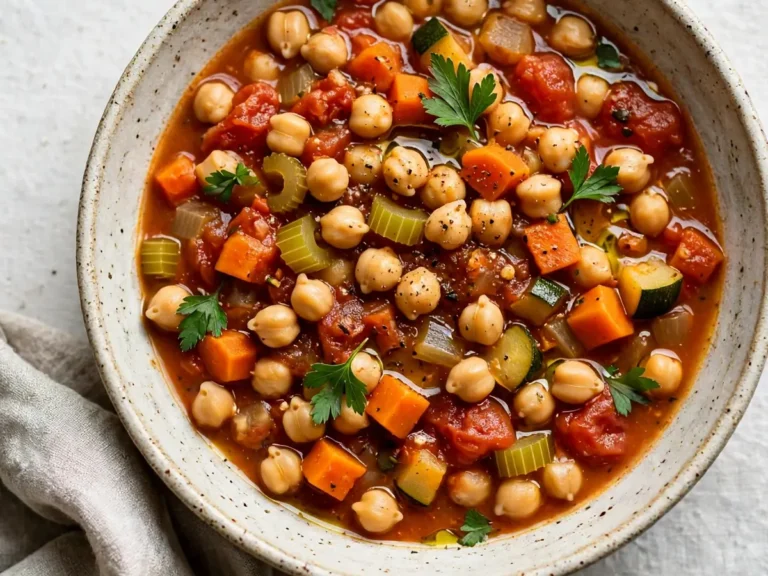
Casseroles: Add 1 to 2 tablespoons (15–30 ml) of water, stock, or milk per serving, cover with foil, and bake at 325°F (165°C) for 15 to 20 minutes, or microwave covered at 70 percent power in 1-minute intervals, stirring between. Stirring redistributes heat and prevents hot spots.
Stews and sauces: Reheat in a saucepan over low heat with 2 to 4 tablespoons (30–60 ml) of water or stock per 2 cups (about 500 ml), stirring occasionally, for 8 to 10 minutes until simmering. A lid helps, but crack it slightly so steam can escape and the sauce can reduce if it is too thin.
Seafood, Eggs, and Delicate Foods
Seafood and eggs overcook in seconds, so use the lowest, briefest heat possible.
Seafood: Reheat salmon, shrimp, or white fish covered in a skillet over low heat with 1 tablespoon (15 ml) of water or butter per serving for 2 to 3 minutes, or microwave at 30 percent power in 20-second intervals. Stop as soon as the center is warm; the fish should flake, not crumble.
Eggs: Scrambled eggs and omelets reheat best in a covered skillet over low heat for 1 to 2 minutes with a teaspoon of water. Hard-boiled eggs are better eaten cold or added to hot dishes at the end rather than reheated.
Practical Substitutions and Storage Guidance
Substitutions: No stock? Use water plus a pinch of salt. No butter? A neutral oil works, though butter adds flavor. No microwave? A covered skillet over low heat or a 325°F (165°C) oven with foil works for nearly everything. No spray bottle? Wet your hands and flick water over bread, or dampen a paper towel and drape it over the food (remove before eating).
Storage: Cool leftovers within 2 hours of cooking, refrigerate in shallow, airtight containers within that window, and use refrigerated leftovers within 3 to 4 days. Label containers with the date. Reheat to 165°F (74°C) throughout, and never reheat the same portion more than once. Freeze portions you will not finish within 3 days; most cooked foods keep well frozen for 2 to 3 months. Thaw overnight in the refrigerator before reheating for the best texture. For more everyday kitchen inspiration, browse the Cuisinebite blog.
Tips for Consistently Better Reheating
- Spread food in a single layer so heat reaches it evenly.
- Stir or flip halfway through microwave and skillet reheating.
- Use 50 to 70 percent microwave power for proteins and grains; full power is fine for liquids and sauces.
- Add sauces and dressings after reheating, not before, so they do not break or dry out.
- Reheat gravies and thin sauces separately and pour over at the end.
- Keep a small spray bottle of water near the microwave — it is the cheapest moisture tool you own.
Frequently Asked Questions
Is it safe to reheat leftovers more than once?
It is safest to reheat a portion only once. Each cooling and reheating cycle gives bacteria more opportunity to multiply if temperatures are not managed carefully, and quality declines with every pass. Portion out only what you plan to eat, reheat it thoroughly to 165°F (74°C), and discard anything left on the plate.
Why does microwaved chicken get rubbery, and how can I prevent it?
Rubbery chicken is usually the result of high, fast heat that overcooks the outer layers while the center is still cold. Use 50 percent power, add a tablespoon of water or stock per serving, cover the dish, and heat in 30-second intervals, checking the internal temperature as you go. Letting it rest covered for 2 minutes finishes the job gently.
Can I reheat rice without a microwave?
Yes. The stovetop steam method works beautifully: place the rice in a fine-mesh strainer set over a pot of simmering water, cover, and steam for 4 to 5 minutes. You can also reheat rice in a covered skillet over low heat with 1 tablespoon of water per cup, stirring once or twice, for about 5 minutes.
What is the best way to reheat pizza so the crust stays crisp?
A covered skillet over medium-low heat is the most reliable home method. The dry pan crisps the bottom, and the lid traps enough heat to melt the cheese. For larger amounts, mist the crust with water and bake at 375°F (190°C) on a sheet pan for 5 to 8 minutes. Avoid the microwave, which steams the crust into submission.
How long can leftovers stay in the refrigerator?
Most cooked leftovers keep safely for 3 to 4 days when refrigerated promptly in shallow, airtight containers. Cool food within 2 hours of cooking, label containers with the date, and freeze anything you will not eat within that window. Reheat to 165°F (74°C) throughout before serving.