Kid-Friendly Dinner Ideas That Hide Vegetables
Getting kids to eat vegetables can feel like a daily negotiation, but it doesn’t have to be a battle. The trick isn’t to sneak vegetables in secretly and hope no one notices — it’s to blend, grate, and fold them into meals kids already love, so the vegetables add moisture, color, and nutrition without changing the familiar flavors and textures on the plate. The five dinner recipes below are built around that idea. Each one is a complete, standalone dish with exact quantities, clear steps, and practical swaps, so you can pick one, cook it tonight, and know exactly what to expect.
A few ground rules make hidden-vegetable cooking work reliably. Grate or finely chop vegetables so they disappear into the texture of the dish. Cook vegetables briefly before folding them into batters and fillings to remove excess water and soften any strong flavors. And keep the seasoning kid-friendly: mild cheese, garlic powder, and a little salt go further than bold spices. With that framework in place, here are five dinners that put vegetables to work without announcing them.
1. Hidden-Veggie Cheesy Chicken Nuggets
These baked nuggets stay juicy thanks to grated zucchini and carrot folded into the chicken mixture. The vegetables add moisture, so the nuggets don’t dry out in the oven, and the coating gives them the crisp edge kids expect.
Servings: 4 (about 24 nuggets) | Prep time: 20 minutes | Cook time: 20 minutes
Ingredients
- 500 g (about 1 lb) ground chicken (or ground turkey)
- 1 small zucchini (about 150 g), coarsely grated
- 1 small carrot (about 60 g), coarsely grated
- 60 g (½ cup) shredded mozzarella
- 1 large egg
- 40 g (½ cup) panko breadcrumbs, plus 60 g (¾ cup) extra for coating
- ½ teaspoon garlic powder
- ½ teaspoon salt
- 2 tablespoons olive oil, for brushing
Equipment
- Box grater
- Clean kitchen towel
- Large mixing bowl
- Sheet pan lined with parchment paper
- Pastry brush
Instructions
- Heat the oven to 200°C (400°F). Grate the zucchini and carrot, then wrap the zucchini in a clean kitchen towel and squeeze firmly to remove as much liquid as possible — you should end up with about ½ cup of packed, dry zucchini.
- In a large bowl, combine the ground chicken, squeezed zucchini, grated carrot, mozzarella, egg, 40 g panko, garlic powder, and salt. Mix with your hands just until evenly combined; overmixing makes the nuggets dense.
- Place the remaining 60 g panko in a shallow dish. Scoop about 1½ tablespoons of the chicken mixture, roll into a small oval, and press gently into the panko to coat all sides. Set on the lined sheet pan. Repeat with the remaining mixture.
- Brush the tops of the nuggets lightly with olive oil. Bake for 12 minutes, then flip each nugget, brush the second side with oil, and bake another 6–8 minutes, until golden and cooked through (an instant-read thermometer inserted into the center should read 74°C / 165°F).
- Rest for 3 minutes before serving. Serve with ketchup, yogurt ranch, or honey mustard for dipping.
Substitutions and storage
Swap ground chicken for ground turkey or lean ground pork. If your child is sensitive to visible green flecks, peel the zucchini before grating. Store leftovers in an airtight container in the refrigerator for up to 3 days; reheat on a sheet pan at 180°C (350°F) for 6–8 minutes to keep the coating crisp. Cooked nuggets freeze well for up to 2 months — reheat from frozen at 190°C (375°F) for 12–15 minutes.
2. Creamy Tomato-Pumpkin Pasta Sauce
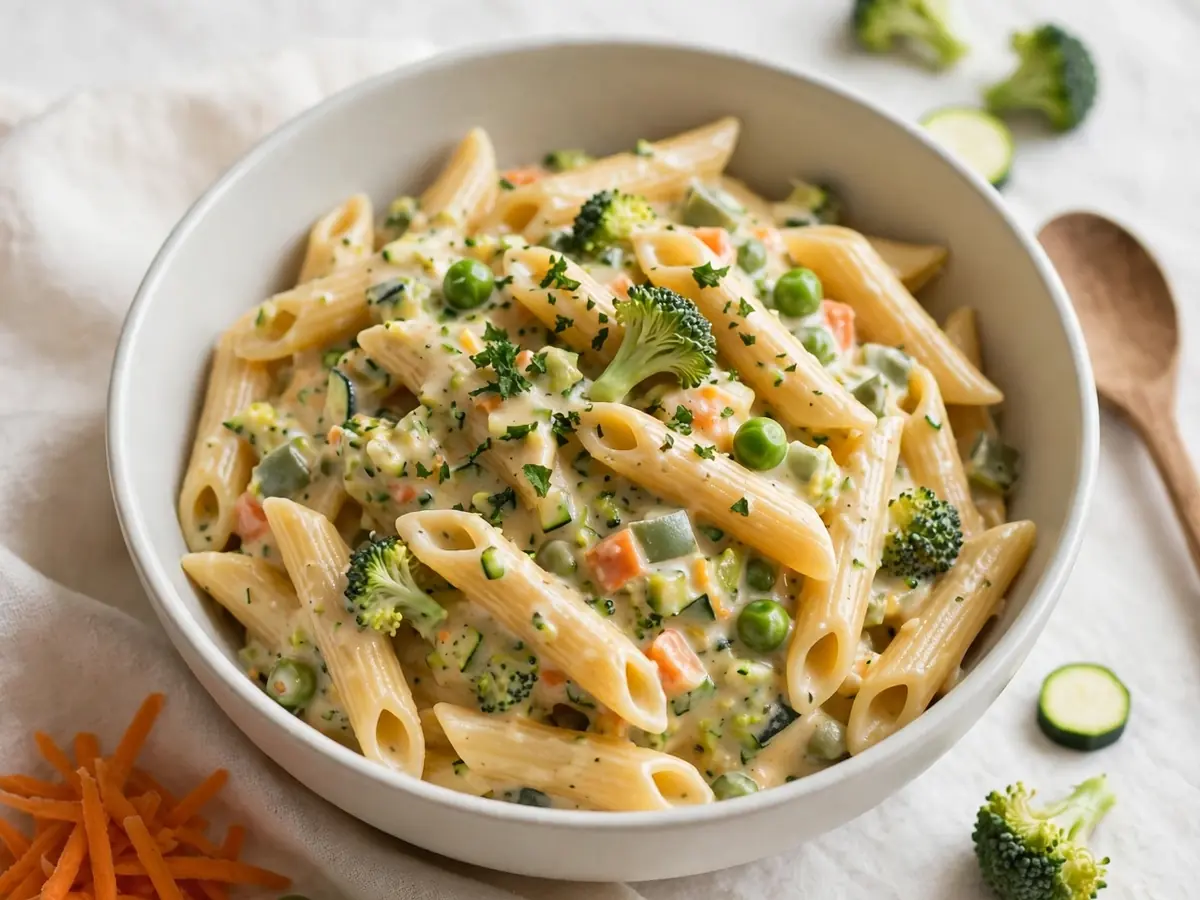
Pumpkin purée melts into a tomato-cream sauce, adding sweetness and body without a squash flavor anyone will identify. The sauce clings to pasta and looks exactly like a familiar pink tomato sauce.
Servings: 4 | Prep time: 10 minutes | Cook time: 20 minutes
Ingredients
- 400 g (14 oz) dried pasta, such as penne or fusilli
- 1 tablespoon olive oil
- 1 small onion (about 120 g), finely chopped
- 2 garlic cloves, minced
- 400 g (14 oz) canned crushed tomatoes
- 240 g (1 cup) pumpkin purée (not pumpkin pie filling)
- 120 ml (½ cup) heavy cream
- 40 g (½ cup) finely grated Parmesan
- ½ teaspoon salt
- ¼ teaspoon black pepper
- Reserved pasta water, as needed
Equipment
- Large pot for pasta
- Large skillet or saucepan
- Wooden spoon
- Colander
Instructions
- Bring a large pot of salted water to a boil and cook the pasta according to package directions until al dente. Before draining, reserve 240 ml (1 cup) of the pasta water.
- While the pasta cooks, heat the olive oil in a large skillet over medium heat. Add the chopped onion and cook for 5–6 minutes, stirring occasionally, until soft and translucent. Add the garlic and cook 1 minute more, until fragrant.
- Stir in the crushed tomatoes, pumpkin purée, salt, and pepper. Simmer for 8–10 minutes, stirring occasionally, until the sauce thickens slightly.
- Reduce the heat to low and stir in the cream and Parmesan until the cheese melts and the sauce is smooth. Taste and adjust salt.
- Add the drained pasta to the skillet and toss to coat, adding reserved pasta water a splash at a time if the sauce looks thick. Serve hot with extra Parmesan.
Substitutions and storage
Use butternut squash purée or sweet potato purée in place of pumpkin. For a dairy-free version, substitute full-fat coconut milk for the cream and nutritional yeast for the Parmesan. Leftover sauce keeps in the refrigerator for up to 4 days and freezes for up to 3 months; reheat gently with a splash of water. Cooked pasta is best eaten within 2 days.
3. Turkey and Zucchini Meatballs in Marinara
Grated zucchini keeps these meatballs tender, and the fine texture means the vegetable goes unnoticed next to the turkey. Simmering them in marinara gives the whole dish a familiar spaghetti-night feel.
Servings: 4 (about 20 meatballs) | Prep time: 20 minutes | Cook time: 25 minutes
Ingredients
- 500 g (about 1 lb) ground turkey
- 1 medium zucchini (about 200 g), coarsely grated and squeezed dry
- 1 large egg
- 50 g (⅔ cup) panko breadcrumbs
- 30 g (⅓ cup) finely grated Parmesan
- 1 teaspoon dried oregano
- ½ teaspoon garlic powder
- ½ teaspoon salt
- 1 tablespoon olive oil
- 700 g (24 oz) jarred or homemade marinara sauce
Equipment
- Box grater and clean kitchen towel
- Large mixing bowl
- Large skillet with lid
- Small ice cream scoop (optional)
Instructions
- Grate the zucchini and squeeze it dry in a clean kitchen towel. In a large bowl, combine the turkey, zucchini, egg, panko, Parmesan, oregano, garlic powder, and salt. Mix gently until just combined.
- Roll the mixture into about 20 meatballs, roughly 3 cm (1¼ inches) across. A small scoop helps keep them even.
- Heat the olive oil in a large skillet over medium-high heat. Brown the meatballs in batches for 2–3 minutes per side, turning gently, then transfer to a plate. They do not need to be cooked through at this stage.
- Pour the marinara into the skillet and bring to a gentle simmer. Return the meatballs to the skillet, cover, and simmer over low heat for 15 minutes, turning once halfway through, until cooked through (74°C / 165°F in the center).
- Serve over spaghetti, in sub rolls, or with crusty bread.
Substitutions and storage
Ground chicken or lean beef works in place of turkey. For a gluten-free version, use gluten-free breadcrumbs. Refrigerate leftovers in an airtight container for up to 3 days; the meatballs actually taste better the next day. Freeze cooled meatballs in sauce for up to 2 months and reheat gently on the stovetop.
4. Cauliflower-Crust Pizza Bites
These handheld pizza bites use a cauliflower base that crisps in a hot oven, topped with tomato sauce and mozzarella. They’re a good entry point for kids who like pizza but are wary of new vegetables, because the cauliflower reads as part of the crust rather than a topping.
Servings: 4 (12 bites) | Prep time: 25 minutes | Cook time: 30 minutes
Ingredients
- 1 medium head cauliflower (about 700 g), cut into florets
- 1 large egg
- 80 g (1 cup) shredded mozzarella, divided
- 40 g (½ cup) finely grated Parmesan
- ½ teaspoon dried oregano
- ½ teaspoon salt
- 120 ml (½ cup) pizza or marinara sauce
- Optional toppings: sliced pepperoni, diced bell pepper, sliced olives
Equipment
- Food processor or box grater
- Steamer basket or microwave-safe bowl
- Clean kitchen towel
- Baking sheet lined with parchment paper
Instructions
- Heat the oven to 220°C (425°F). Rice the cauliflower in a food processor (or grate it), then steam for 5 minutes until tender. Spread it on a clean kitchen towel and let it cool for 5 minutes, then squeeze out as much liquid as possible — this step is essential for a crust that holds together.
- In a bowl, combine the squeezed cauliflower, egg, 40 g of the mozzarella, Parmesan, oregano, and salt. Mix until a soft dough forms.
- Divide the dough into 12 portions and press each into a small round about 6 cm (2½ inches) wide on the lined baking sheet. Bake for 15 minutes, until the edges are set and lightly golden.
- Top each round with about 1 teaspoon of sauce and a pinch of the remaining mozzarella, plus any optional toppings. Return to the oven for 8–10 minutes, until the cheese is melted and bubbling.
- Cool for 3 minutes before serving — the bites firm up as they cool.
Substitutions and storage
Use frozen riced cauliflower (about 500 g) thawed and squeezed dry to save time. For a dairy-free version, use a plant-based mozzarella that melts well. Store leftovers in the refrigerator for up to 2 days and reheat at 200°C (400°F) for 6–8 minutes. These do not freeze well, as the crust becomes watery.
5. Sweet Potato and Black Bean Quesadillas
Mashed sweet potato blends into black beans and melted cheese, giving these quesadillas a creamy filling with a subtle sweetness kids tend to accept easily. The filling holds together well, so the quesadillas are easy to pick up and dip.
Servings: 4 | Prep time: 15 minutes | Cook time: 20 minutes
Ingredients
- 1 medium sweet potato (about 300 g), peeled and cut into 2 cm chunks
- 1 tablespoon olive oil, plus more for the pan
- 1 small onion (about 100 g), finely chopped
- 1 garlic clove, minced
- 400 g (14 oz) canned black beans, drained and rinsed
- ½ teaspoon ground cumin
- ½ teaspoon salt
- 150 g (1½ cups) shredded cheddar or Monterey Jack
- 8 small flour tortillas (about 18 cm / 7 inches)
- Optional: salsa and sour cream, for dipping
Equipment
- Medium pot
- Potato masher or fork
- Large skillet
- Spatula
Instructions
- Boil the sweet potato chunks in salted water for 10–12 minutes, until fork-tender. Drain and mash until mostly smooth; small lumps are fine.
- While the sweet potato cooks, heat 1 tablespoon olive oil in a large skillet over medium heat. Cook the onion for 4–5 minutes until soft, then add the garlic and cook 1 minute more.
- Add the black beans, cumin, and salt to the skillet and cook for 3 minutes, lightly mashing about half the beans with the back of a spoon. Stir in the mashed sweet potato until evenly combined. Remove from the heat.
- Wipe the skillet clean and heat it over medium heat with a thin film of olive oil. Place one tortilla in the pan, spread about ⅓ cup of the filling over half of it, sprinkle with about 3 tablespoons of cheese, and fold the empty half over the filling. Cook for 2–3 minutes per side, until golden and the cheese is melted. Repeat with the remaining tortillas and filling, adding oil as needed.
- Cut each quesadilla into wedges and serve with salsa and sour cream, if desired.
Substitutions and storage
Swap the sweet potato for mashed butternut squash. Use canned pinto beans in place of black beans. For a dairy-free version, use a plant-based shredded cheese that melts well. The filling can be made up to 3 days ahead and refrigerated; assembled quesadillas are best cooked fresh but can be refrigerated for up to 2 days and reheated in a skillet over medium heat for 2 minutes per side.
Tips for Hiding Vegetables Without Losing Flavor
- Squeeze, don’t skip. Grated zucchini and cauliflower release a lot of water. Squeezing them dry in a clean towel keeps baked goods, nuggets, and crusts from turning soggy.
- Match the color. Orange vegetables (carrot, sweet potato, pumpkin) disappear into tomato sauces, mac and cheese, and quesadilla fillings. Green vegetables blend best into pesto, meatballs, and dark sauces.
- Grate finer for skeptical eaters. A box grater or food processor produces pieces small enough to escape notice; larger chunks invite inspection.
- Introduce gradually. Start with a small amount of vegetable in a familiar dish and increase the proportion over several weeks as acceptance grows.
- Keep the familiar anchor. Serve hidden-vegetable dishes alongside something your child already trusts — a favorite dip, a slice of bread, or a piece of fruit — so the meal feels safe.
Frequently Asked Questions
Can I prepare these hidden-vegetable dinners ahead of time?
Yes. The chicken nuggets can be shaped and coated up to 24 hours ahead and stored covered in the refrigerator before baking. The pumpkin tomato sauce and the meatball filling can be made 1–2 days in advance, and the quesadilla filling keeps for up to 3 days. The cauliflower pizza bites are best assembled and baked fresh, though the squeezed cauliflower can be prepared a day ahead and refrigerated in a covered container.
Will kids actually taste the vegetables in these recipes?
In most cases, no — the vegetables are grated, mashed, or puréed so finely that they blend into the texture of the dish. Zucchini adds moisture to meatballs and nuggets, pumpkin adds body to tomato sauce, and sweet potato thickens the quesadilla filling. Strong-flavored vegetables like cauliflower are paired with cheese and tomato sauce, which mask any bitterness.
What can I substitute if my child has a dairy or gluten allergy?
For dairy-free versions, use plant-based shredded cheese that melts well, full-fat coconut milk in place of cream, and nutritional yeast instead of Parmesan. For gluten-free versions, replace panko with gluten-free breadcrumbs and use gluten-free tortillas or a gluten-free pizza base. Always check labels on canned beans and jarred sauces if cross-contamination is a concern.
How long do leftovers last, and how should I reheat them?
Most cooked leftovers keep in an airtight container in the refrigerator for 3–4 days. Reheat nuggets and pizza bites on a sheet pan at 180–200°C (350–400°F) for 6–10 minutes to restore crispness. Reheat meatballs and sauce gently on the stovetop, and reheat quesadillas in a dry skillet over medium heat for about 2 minutes per side. Freeze nuggets and meatballs for up to 2 months; avoid freezing the cauliflower pizza bites, which become watery.
How much vegetables should I add without ruining the dish?
As a general guide, use about 100–150 g of grated or puréed vegetable per 500 g of meat in meatball and nugget recipes, and up to 1 cup of purée per 400 g can of tomatoes in sauces. Start at the lower end for very skeptical eaters and increase gradually. Too much vegetable in a baked crust or batter can make it wet, so always squeeze grated vegetables dry before measuring.